Materials guide · 8 minute read
Choosing between stainless steel and silicone baby plates can feel harder than it should. Both materials are common in Australian homes, but they solve different mealtime problems. This practical comparison explains where each works well, what to check before buying and why some families prefer a design that combines the two.
Want the strengths of both materials?
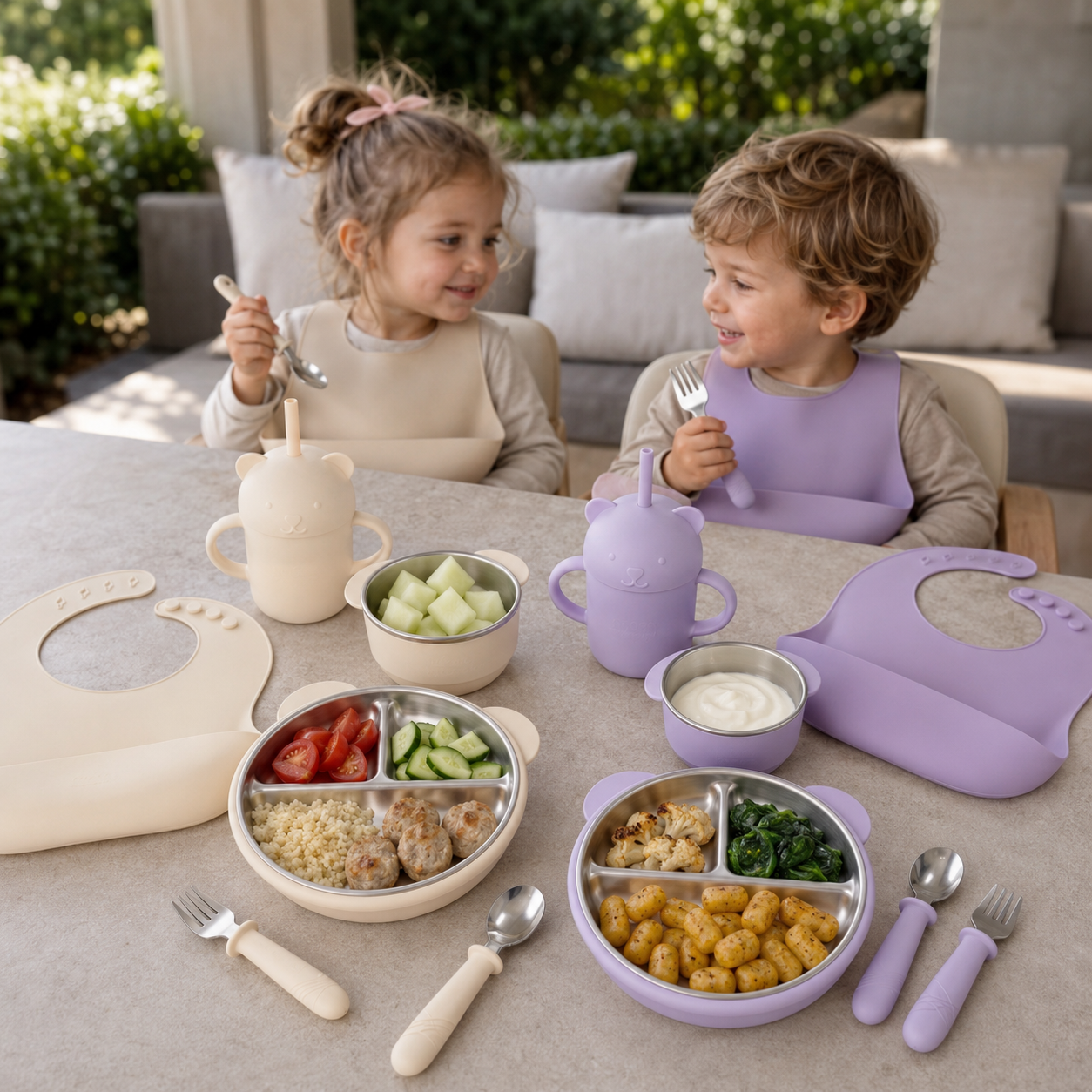
The Bear Set pairs a SUS304 stainless steel food-contact surface with removable silicone for grip, softer edges and suction. Available in Oat and Lavender for $54.95 AUD.
Shop The Bear SetStainless steel vs silicone baby plates: the quick comparison
| What parents compare | Stainless steel | Silicone |
|---|---|---|
| Surface | Firm, smooth and non-porous | Soft, flexible and quieter on the table |
| Durability | Designed for repeated everyday use | Flexible and resistant to ordinary drops |
| Grip | Usually needs a separate non-slip base | Can form a suction base against smooth surfaces |
| Cleaning | Easy to inspect and wipe clean | Benefits from thorough rinsing and drying |
| Microwave use | Never microwave stainless steel | Follow the manufacturer’s instructions |
| Best fit | Families prioritising a firm, long-lasting eating surface | Families prioritising softness, grip and suction |
Why choose stainless steel baby plates?
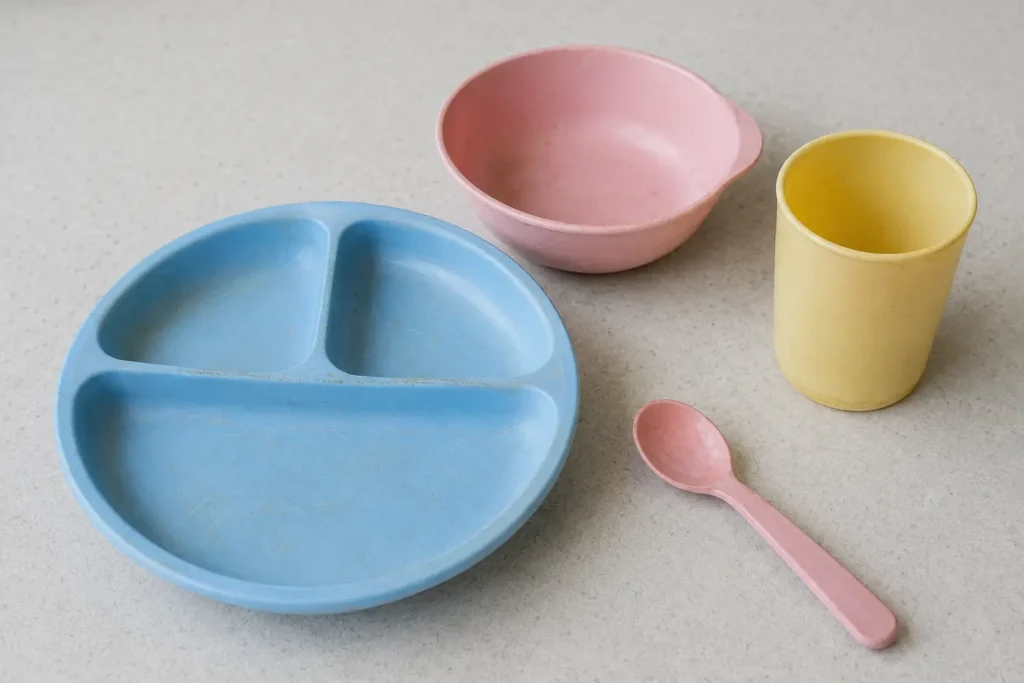
Parents searching for stainless steel baby plates in Australia are often looking for a durable alternative to all-plastic or all-silicone dinnerware. Stainless steel offers a firm surface that does not flex under food and is straightforward to inspect after washing.
The grade matters. “Stainless steel” describes a family of alloys rather than one single material. For toddler dinnerware, look for a clearly identified grade and transparent care instructions. The Bear Set uses SUS304 stainless steel on the food-contact pieces.
Where stainless steel performs well
- Repeated breakfasts, lunches, snacks and dinners.
- Foods that can leave colour or aroma behind on softer materials.
- Families wanting one set to cover the baby-to-toddler transition.
- Dishwasher cleaning when the manufacturer confirms it is suitable.
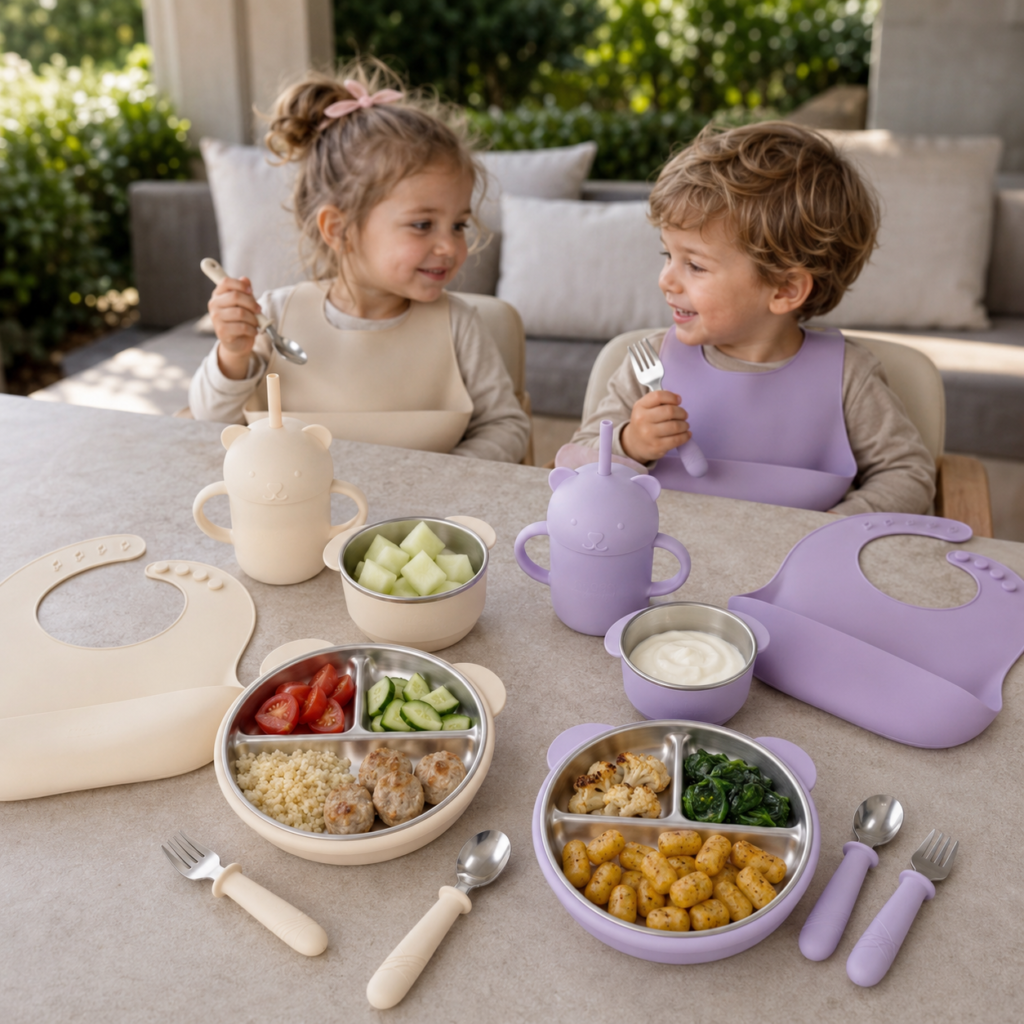
A firm stainless steel eating surface with removable silicone around the edges and base.
Why choose silicone baby plates?
Silicone is popular because it is soft, flexible and can grip a smooth highchair tray. A well-designed silicone suction plate can reduce sliding while a child learns to scoop food independently. Silicone also works well for bibs, handles, lids and the softer edges of toddler utensils.
Not every silicone product behaves the same way. Construction, thickness and care instructions vary. Check whether the product identifies the type of silicone, whether it can be separated for washing and which temperatures the manufacturer permits.
Is a combined stainless steel and silicone plate a better option?
A hybrid design can use each material for the job it does best: stainless steel for the eating surface and silicone for suction, grip and softer contact points. The important detail is whether the components separate. Removable parts make it easier to reach the areas where food and water can collect.
See the hybrid design up close
Compare the removable steel and silicone components, dimensions and all eight pieces included with The Bear Set.
View Oat View LavenderWhat to check before buying any baby plate
- Clear material information. Look beyond broad phrases and check what touches the food.
- Age-appropriate dimensions. The plate should fit the highchair or table without crowding the child.
- Realistic suction expectations. Suction works best on clean, smooth, non-porous surfaces. Texture, crumbs and moisture reduce grip.
- Cleaning access. If pieces join together, confirm that they can be separated and dried fully.
- Care instructions. Check dishwasher, microwave and temperature guidance before use.
- Condition before every meal. Stop using a component if it becomes damaged.
For general Australian baby-product guidance, parents can also check the Australian Competition and Consumer Commission’s Keep baby safe resources and current product recalls.
Frequently asked questions
Are stainless steel baby plates dishwasher safe?
Many are, but always follow the individual product instructions. The Bear Set is dishwasher safe when its stainless steel and silicone components are separated before washing.
Can a stainless steel plate go in the microwave?
No. Stainless steel and any assembled component containing stainless steel must not be placed in a microwave.
Does silicone suction work on wooden tables?
It depends on the finish. Smooth sealed surfaces usually provide a better seal than textured, worn or porous wood. Wipe both the surface and the suction base before pressing down firmly.
Which material is easier for toddlers?
That depends on the child and the table. Silicone can add grip and softer edges; stainless steel provides a firm eating surface. A combined design can offer both without requiring two separate plates.
Practical guidance by email
Make toddler mealtimes a little simpler
Receive occasional feeding-set guides, cleaning tips and product updates from PureSteel Co.
Ready for calmer everyday meals?
Meet the complete stainless steel toddler feeding set
Plate, bowl, cup, two lids, spoon, fork and bib—available in Oat or Lavender and dispatched from Perth.
Shop The Bear Set — $54.95