Dimensions and fit
The best toddler plate size is not simply the largest plate that fits on the table. It should suit the highchair or eating space, leave room for the child’s hands and provide edges that support early scooping without crowding the meal.
Check the exact dimensions before buying
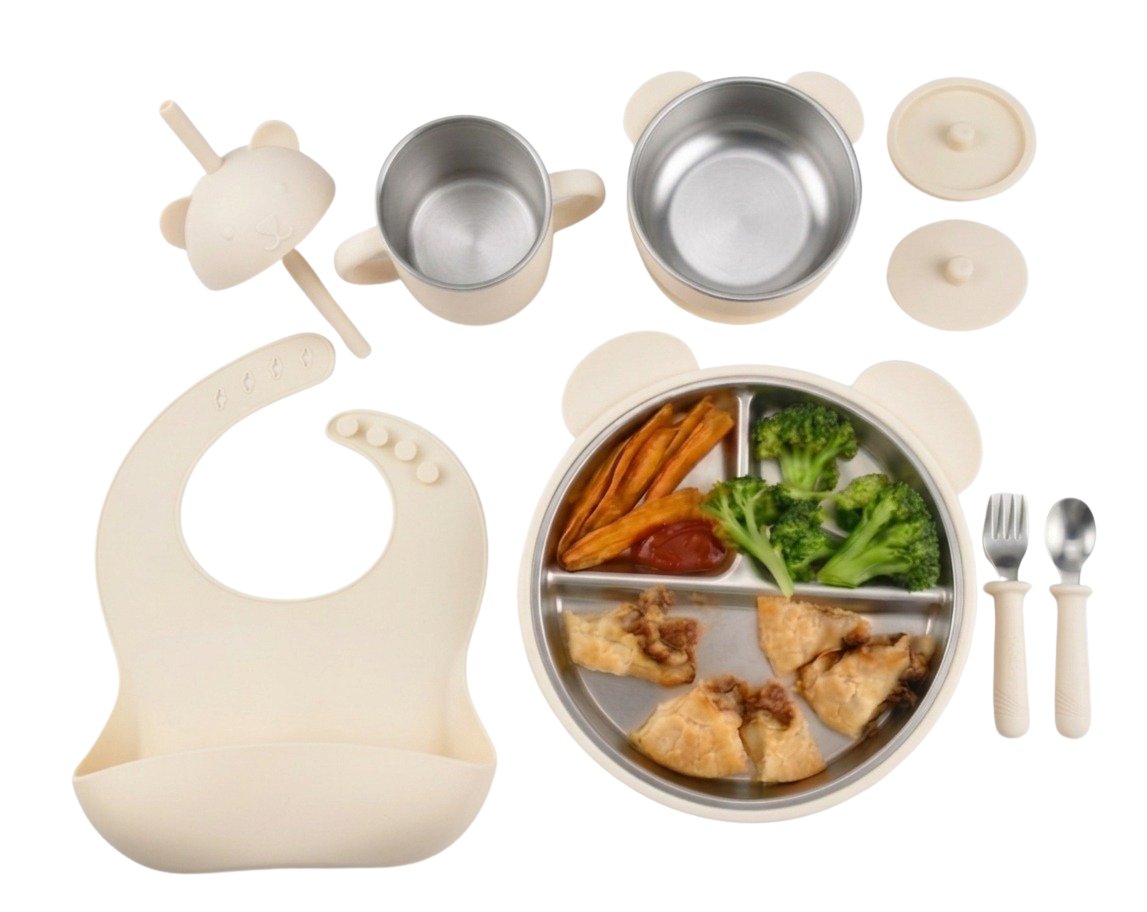
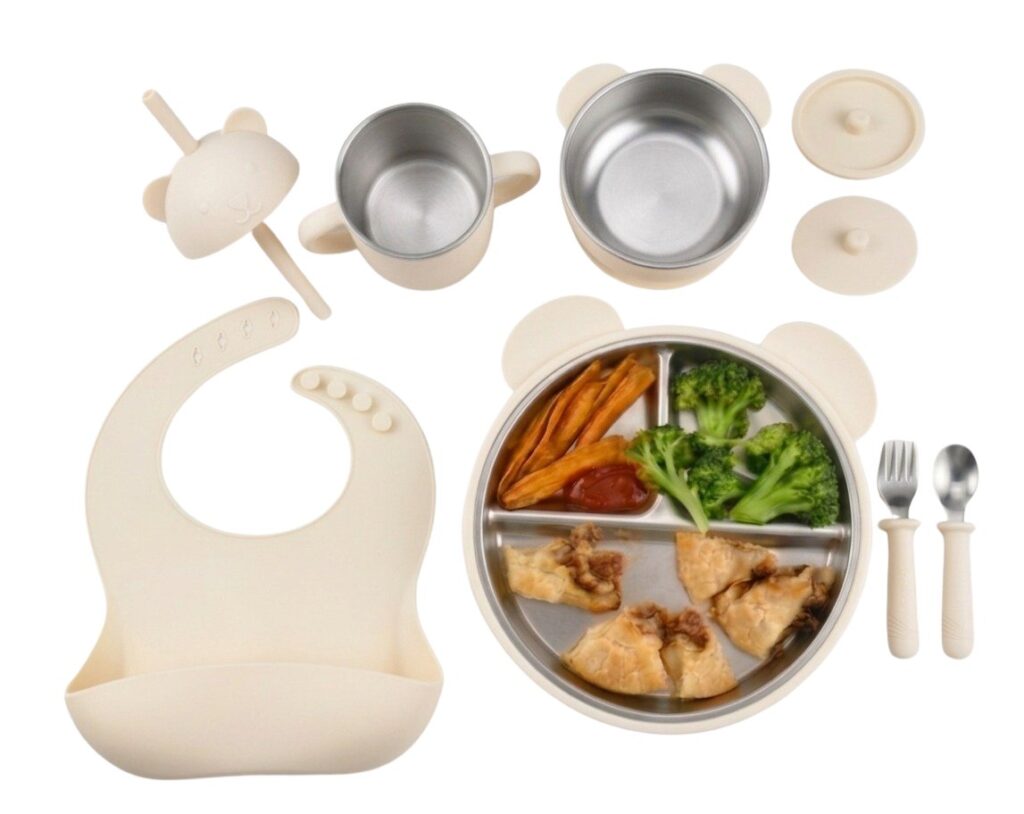
The Bear Set includes an 18 cm divided plate, 12 cm snack bowl, 200 mL handled cup and 13 cm spoon and fork.
Toddler plate size guide at a glance
| Item | What to measure | Practical consideration |
|---|---|---|
| Plate | Overall width and depth | It should sit fully inside the flat area of the tray or table. |
| Bowl | Diameter, depth and base | A compact bowl can be easier to position beside a cup or plate. |
| Cup | Capacity, base and handle width | Check that the child can hold it and that it fits the available space. |
| Utensils | Total length and handle thickness | Shorter utensils can be easier for small hands to control. |
| Suction base | Full contact footprint | The entire base needs a smooth, flat area rather than only the steel insert fitting. |
Measure the highchair tray first
Measure the uninterrupted flat area, not the tray’s full outer dimensions. Cup recesses, raised edges, curved corners and textured sections reduce the space available for a suction base.
- Measure the flat width from left to right.
- Measure the usable depth from the front edge to the child’s side.
- Note any cup holder, divider, seam or curve.
- Compare those measurements with the complete base of the plate.
- Leave a little space for placing and releasing the plate without trapping fingers.
If suction matters, the material of the tray is as important as its dimensions. Read Why Suction Plates Stop Sticking before choosing a placement.
Is an 18 cm toddler plate a practical size?
An 18 cm plate offers space for several small food portions without taking up the area of a full adult dinner plate. The Bear Set’s divided plate is 18 cm across and is designed for baby and toddler mealtimes from approximately 6 months to 5 years, always with active adult supervision.
Age ranges are guides rather than a guarantee of fit. Children develop at different rates, and highchair trays vary considerably. Use the exact dimensions and your own eating space when deciding.
See how the set fits together
Compare the plate, bowl, cup and utensils in Oat or Lavender, with removable silicone components and stainless steel eating surfaces.
How deep should a toddler bowl be?
Bowl depth should support scooping while still allowing the child to see and reach the food. A very wide bowl can occupy most of a small highchair tray; a compact bowl may be easier for snacks, yoghurt, oats or smaller meal portions.
The Bear Set snack bowl is 12 cm across. Its suitability depends on the food being served and the child’s stage, so use the dimensions rather than relying only on a product photograph.
What cup capacity suits a toddler?
Cup capacity affects both weight and spill volume. A very large cup becomes heavier when full, while a very small cup needs frequent refilling. The Bear Set’s handled straw cup holds 200 mL and includes two lid options.
Check the complete width with handles, not just the diameter of the cup body. Make sure it sits away from the plate’s suction edge and does not crowd the child’s arm movement.
How long should toddler cutlery be?
Toddler utensils should be proportionate to smaller hands and mouths while remaining long enough to reach the food. The Bear Set spoon and fork are 13 cm long. Rounded handles and balanced weight can help during early self-feeding, but the child’s coordination and preferences still matter.
Do divided sections change the useful plate size?
Yes. The outside diameter tells you whether the plate fits the tray, but the internal compartments determine how food can be arranged. Divided plates can separate textures and make small amounts visible, while an open bowl is useful for foods that need scooping.
A set containing both formats offers more flexibility than relying on one plate for every meal.
Plate size and portion size are not the same thing
A larger section does not mean it must be filled. Offer food in amounts appropriate to the child and respond to hunger and fullness cues. For general Australian information about introducing solids and responsive feeding, see Raising Children Network guidance.
Quick buying checklist
- Measure the usable flat tray area.
- Check the full suction footprint.
- Compare plate width, bowl diameter and cup handle width.
- Confirm utensil length.
- Consider where the child’s arms and cup will sit.
- Check cleaning, storage and care instructions.
- Choose dimensions from the product listing rather than estimating from photographs.
Frequently asked questions
Is a bigger toddler plate better?
Not necessarily. It must fit the eating surface and the child’s reach. A plate that overhangs or crowds the tray can be less practical.
Will an 18 cm plate fit every highchair?
No. Tray dimensions, cup holders, curves and textures differ. Measure the uninterrupted flat area before ordering.
When can a baby start using a divided plate?
Use feeding products according to their age guidance and the child’s developmental readiness. Babies should be seated safely and supervised. Speak with a health professional if you are unsure about starting solids.
Practical guidance by email
Make toddler mealtimes a little simpler
Receive occasional feeding-set guides, cleaning tips and product updates from PureSteel Co.
Exact dimensions, fewer surprises
Check The Bear Set before it reaches your table
Review every component, colour, measurement and care instruction in one place.