MATERIALS & MEALTIME
If yoghurt suddenly tastes like dishwasher detergent, or yesterday’s tomato sauce still seems to be present at breakfast, the plate may be part of the problem. Silicone baby plates can sometimes retain food odours, oils or fragranced washing products. That does not happen with every silicone product, and an odour alone does not prove that an item is unsafe, but it is a practical issue worth understanding.
Quick answer: silicone can hold onto traces of strongly scented detergent, fats and aromatic foods. Product quality, curing, heat, washing and storage all matter. If a persistent smell or taste remains after proper cleaning, stop using the item and check the manufacturer’s care advice.
Prefer steel where the meal sits?
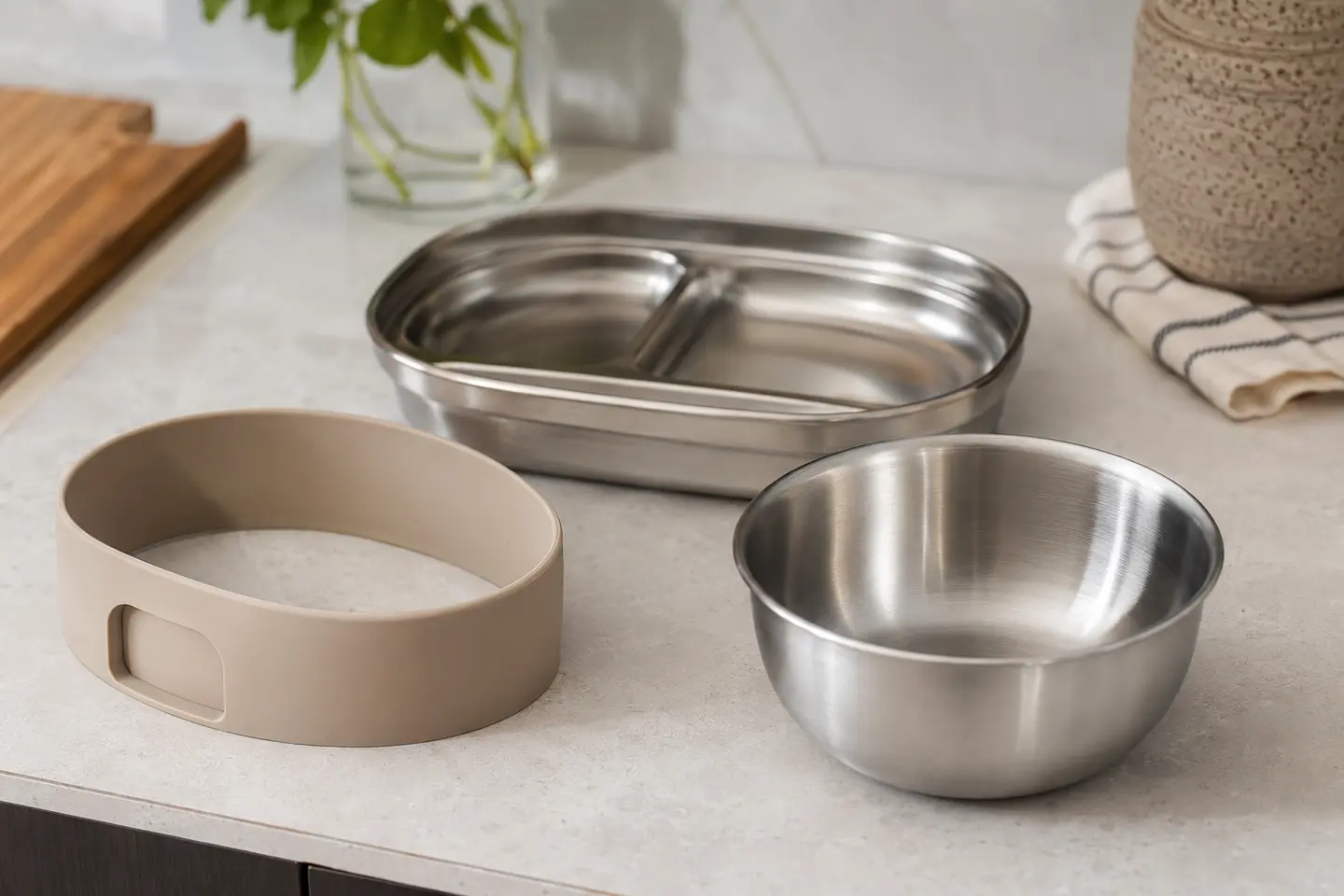
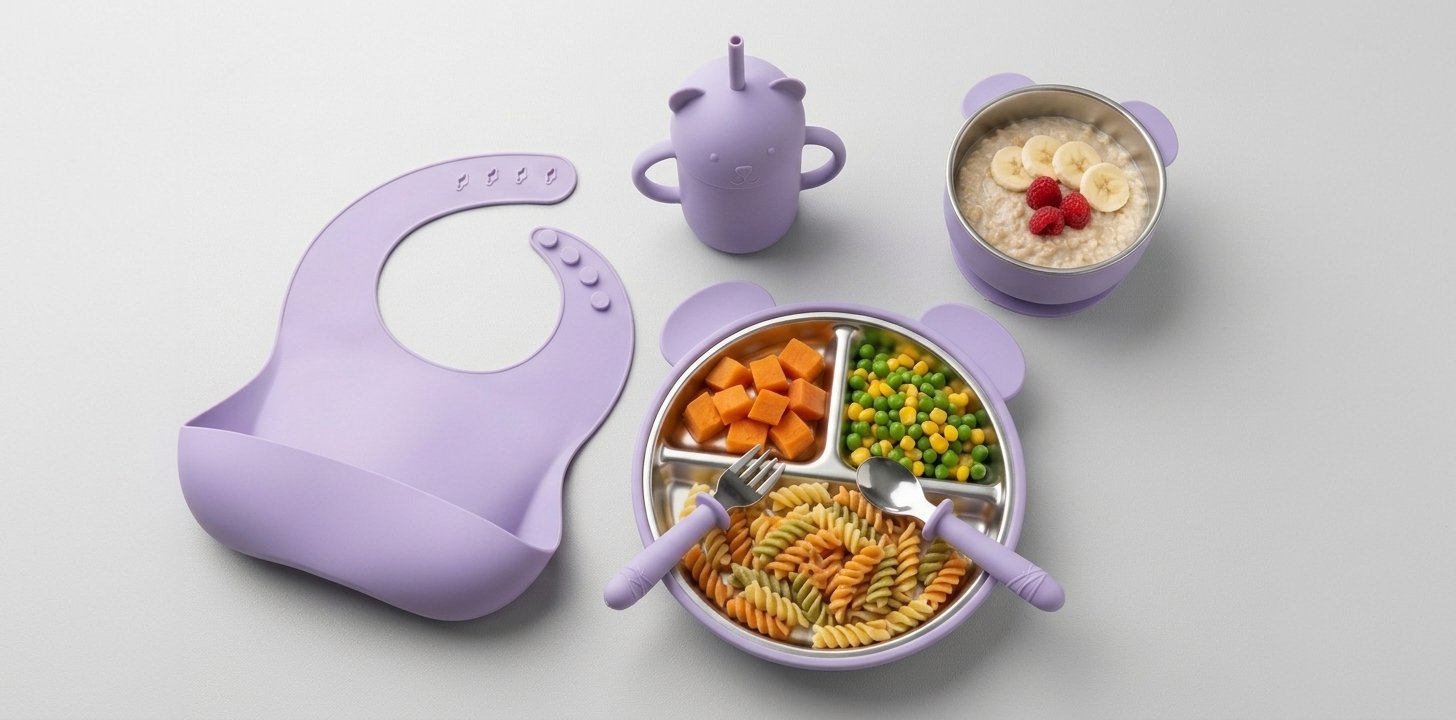
The Bear Set uses removable silicone for suction and grip, with stainless steel surfaces for the plate, bowl, cup and cutlery.
Can silicone baby plates affect taste or smell?
They can in some circumstances. Parents commonly notice a soapy taste after dishwasher cycles or lingering smells after foods such as tomato, curry, garlic, egg or oily sauces. The experience varies by product and by how it is used. A well-made, food-grade silicone item is intended for food contact, but the phrase food grade does not mean that every product performs identically or that care instructions can be ignored.
Food-contact standards recognise taste and smell as relevant qualities. The European framework cited by Germany’s Federal Institute for Risk Assessment requires materials not to cause an unacceptable change in food or impair its organoleptic properties, meaning characteristics such as taste and odour. This is separate from the question of whether a material creates a health risk.
Why does a silicone plate taste like soap?
The most likely explanation is residue rather than the silicone suddenly changing. Fragranced dishwasher tablets, rinse aid or concentrated detergent can leave traces on an item, especially when too much product is used or the rinse is incomplete. Warm food then makes the fragrance easier to notice.
- Fragranced detergent: perfume can be more noticeable than the detergent itself.
- Oily foods: fats can carry strong aromas and make residues harder to rinse away.
- Strongly coloured or aromatic meals: tomato, curry, garlic and similar foods may leave a noticeable smell.
- Heat and long contact: warm food or storage in a closed container can make trapped odours more obvious.
- Incomplete drying: stacking a damp plate can trap a stale smell.
Does silicone quality make a difference?
Yes. Silicone products differ in formulation, manufacturing and post-curing. A 2022 study of four commercial silicone food moulds found that the two higher-quality samples met the volatile-loss benchmark used by the BfR, while two lower-quality samples exceeded it before additional post-curing. The study concerned baking moulds, not toddler plates, so it should not be used to declare every silicone plate unsafe. It does show why quality cannot be judged by colour or softness alone.
Health Canada advises using food-grade silicone within the manufacturer’s intended use and temperature instructions. For baby dinnerware, also check the supplier’s material information, care directions and any applicable food-contact testing. Replace an item that becomes sticky, cracked, torn or permanently distorted.
Use each material for what it does well
Stainless steel gives the main eating surfaces a smooth, easy-to-inspect finish. Removable silicone adds suction, grip and softer contact points.
Silicone vs stainless steel for everyday toddler meals
| What to compare | Stainless steel | Silicone |
|---|---|---|
| Odour and flavour | Smooth, non-porous surface that is easy to rinse and inspect | Can retain noticeable food or detergent odours in some conditions |
| Suction | Requires a separate base or sleeve | Flexible and useful for creating suction |
| Inspection | Scratches, marks and residue are generally easy to see | Check regularly for tears, stickiness, trapped residue and persistent odour |
| Microwave | Never microwave stainless steel | Follow the product’s specific instructions |
| Best combined use | Plate, bowl, cup and cutlery surfaces | Removable suction, grip, lids and softer contact points |
How to remove a soapy smell from a silicone baby plate
Start with the manufacturer’s instructions because not every silicone product is designed for the same temperatures or cleaning methods. A conservative everyday routine is:
- Separate every removable part so food and washing water cannot remain in joins.
- Wash with the recommended amount of a mild detergent. If fragrance is the problem, choose an unscented option.
- Rinse thoroughly with clean water, including the underside and any suction channels.
- Allow every component to dry completely before reassembling or stacking it.
- Smell the clean, dry item before adding food. If the odour remains strong, repeat the approved cleaning method rather than masking it.
- Stop using the item if the smell persists, the surface becomes sticky or damaged, or food repeatedly develops an unwanted taste.
Avoid improvising with high heat, harsh chemicals or abrasive scrubbing unless the manufacturer specifically permits them. A method that works for a silicone baking mould may not be appropriate for a child’s plate, lid or suction base.
Is a silicone smell a safety warning?
Not automatically. Smell is useful evidence that something is present, but it cannot identify the substance or measure risk. A detergent fragrance, retained food oil and a manufacturing-related volatile compound are different issues. If a new product has a strong chemical smell, or a cleaned item repeatedly changes the taste of food, do not keep serving from it while hoping the problem disappears. Contact the seller or manufacturer and use an alternative.
It is also important not to generalise laboratory findings beyond their scope. Recent research has detected migration from some silicone food-contact products under severe test conditions, but results vary by product, food simulant, temperature and exposure time. That supports careful product selection and correct use; it does not prove that all silicone dinnerware creates the same exposure.
Why a removable hybrid design can be practical
A hybrid design avoids treating one material as perfect for every job. Stainless steel can form the main food-contact surface, while silicone provides suction and grip. When those components separate, parents can reach the joins, wash both sides and inspect the set before reassembly.
The Bear Set follows that approach. Its SUS304 stainless steel plate and bowl lift out of their silicone suction sleeves, and the pieces can be cleaned separately. Stainless steel must never go in the microwave, and every part should still be used according to the care instructions.
Frequently asked questions
Why does food taste like dishwasher detergent on silicone?
Fragranced detergent or rinse aid may remain noticeable after washing, especially if too much product was used or rinsing was incomplete. Wash again according to the care instructions, rinse thoroughly and let the item dry fully before serving food.
Do all silicone baby plates absorb smells?
No. Performance differs between products and depends on manufacturing, age, washing, food type, temperature and storage. The practical test is whether the clean, dry item remains neutral during normal use.
Is stainless steel better than silicone for toddler plates?
Stainless steel is useful for a durable, smooth food-contact surface, while silicone is useful for suction and grip. A removable hybrid plate can combine those strengths and make the joins easier to clean.
Should I throw away a silicone plate that smells?
First follow the manufacturer’s approved cleaning method. If a strong smell persists when the item is clean and dry, food develops an unwanted taste, or the silicone is sticky, cracked or torn, stop using it and contact the manufacturer.
A PRACTICAL HYBRID
Steel for meals. Silicone for suction.
Explore an eight-piece toddler feeding set designed to come apart for washing, available in Oat and Lavender.
Sources and further reading
- German Federal Institute for Risk Assessment: food-contact material recommendations
- Health Canada: safe use of cookware and food-grade silicone
- Food and Chemical Toxicology: migration compounds from commercial silicone moulds
Practical guidance by email
Make toddler mealtimes a little simpler
Receive occasional feeding-set guides, cleaning tips and product updates from PureSteel Co.
Leave a Reply