Cleaning and care guide
Stainless steel toddler plates are straightforward to care for when food is removed promptly, joined components are separated and every part is allowed to dry fully. This practical routine keeps the eating surface, suction base and joins easy to inspect between meals.
A feeding set designed to come apart
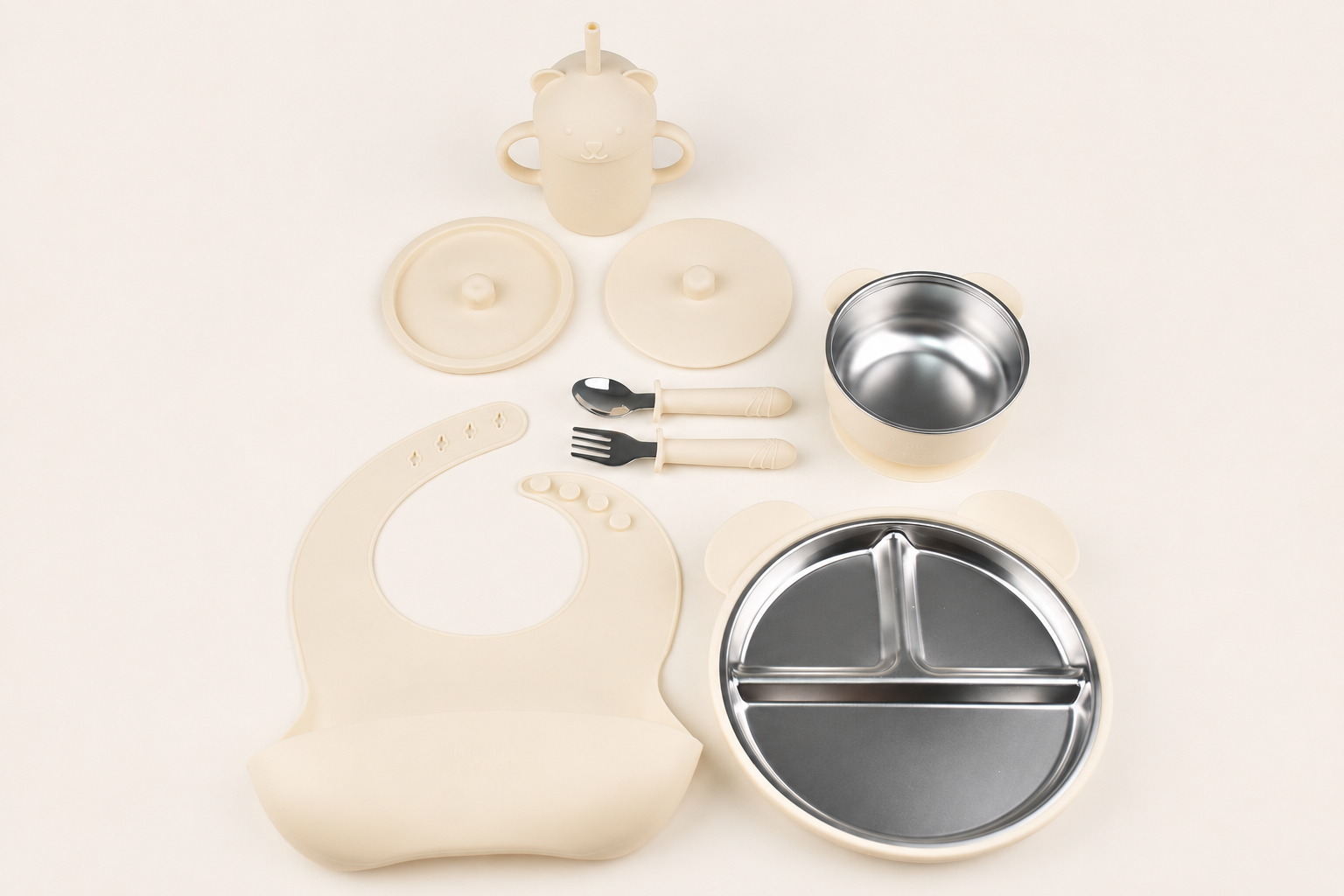
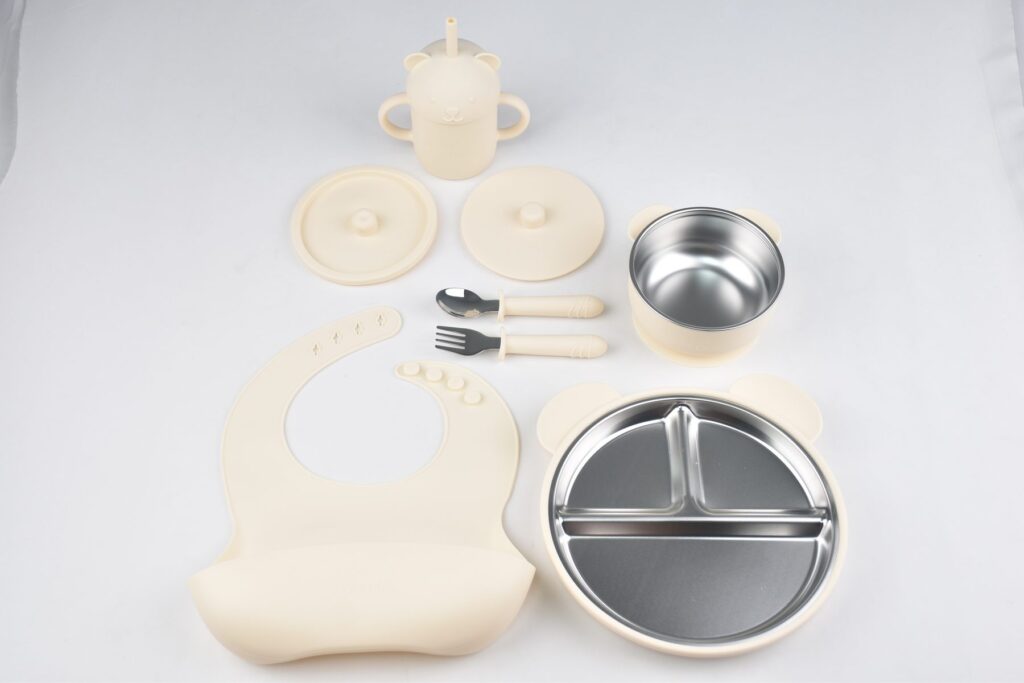
The Bear Set combines a SUS304 stainless steel eating surface with removable platinum-cured silicone components, so the areas around the plate and bowl can be reached during washing.
How to clean stainless steel toddler plates after a meal
- Remove leftover food. Scrape food into the bin or compost before it dries onto the surface.
- Separate removable components. If the plate has a silicone base, sleeve or seal, remove it according to the product instructions. Do not leave moisture trapped between materials.
- Rinse visible residue. Use running water to clear food from corners, compartments and joins.
- Wash every surface. Use warm water, ordinary dishwashing liquid and a soft cloth or non-scratch sponge. Pay attention to the underside and the inside edge of silicone parts.
- Rinse thoroughly. Remove detergent from the steel, silicone and any drinking components.
- Dry before reassembly. Place separated parts on a clean drying rack. Reassemble only when the contact areas are dry.
Australian parenting guidance recommends using clean spoons, bowls and plates for baby food and washing them with warm soapy water or in the dishwasher. See the current Raising Children Network guidance on starting solids.
Can stainless steel toddler plates go in the dishwasher?
Many stainless steel feeding products are dishwasher safe, but the care instructions for the complete product always take priority. The Bear Set is dishwasher safe when the stainless steel and silicone components are separated before washing. Separating them helps water reach the joins and lets the parts dry independently.
Place small utensils, lids and straw components where they cannot fall through the rack. After the cycle, inspect recessed areas and allow any remaining moisture to dry before putting the set away.
Make everyday clean-up simpler
The complete eight-piece Bear Set includes a divided plate, snack bowl, handled straw cup, two lids, spoon, fork and bib.
How to clean a removable silicone suction base
Silicone suction parts need attention on both sides. Food residue, grease or detergent left on the base can also reduce its grip on a smooth table or highchair tray.
- Remove the silicone component rather than washing only the visible surface.
- Clean inside edges, grooves and contact points with a soft sponge.
- Rinse away detergent thoroughly.
- Let the base dry separately from the steel component.
- Before the next meal, wipe the table or tray so it is clean, smooth and free from crumbs.
If suction performance is the main concern, read Why Suction Plates Stop Sticking for a step-by-step surface and placement check.
What should you avoid when cleaning stainless steel dinnerware?
Avoid harsh or abrasive cleaning methods unless the manufacturer specifically permits them. Steel wool, sharp scrapers and highly abrasive pads can change the finish. Do not use an unapproved chemical treatment simply because it is recommended for a sink or appliance; toddler dinnerware has direct food contact and its own care instructions.
Never put stainless steel in a microwave. If a product combines steel and silicone, the entire assembled item must stay out of the microwave while the steel component is attached.
What about water spots or marks?
Water spots are often more visible on reflective stainless steel than on coloured materials. They are usually reduced by rinsing well and drying the item rather than leaving droplets on the surface. For persistent marks, start with the normal washing routine and a soft cloth. If a mark remains, consult the product manufacturer before using a specialist cleaner.
How often should toddler dinnerware be checked?
Give every component a quick visual and tactile check before use. Look for damage, rough edges, trapped residue, loose joins or a silicone part that no longer sits as intended. Stop using a damaged component and contact the manufacturer for guidance.
A practical routine for daycare and travel
When the set is travelling, pack clean and fully dry components in a clean container. Keep used items separate from clean utensils and wash them as soon as practical. If the dinnerware is going to daycare, label the storage container and share the relevant care instructions with educators.
Frequently asked questions
Do I need to sterilise a toddler plate after every meal?
Routine cleaning requirements depend on the child, the product and any advice provided by a health professional. For ordinary meals, follow the manufacturer’s washing instructions and current hygiene guidance. Ask a health professional if your child has specific medical or infection-control needs.
Can the stainless steel and silicone parts dry together?
They can sit on the same clean drying rack, but keep removable components separated until the contact areas are fully dry.
Why does the suction base need to be washed separately?
Removing it exposes the surfaces where food, detergent and water can collect. A clean base also has better contact with a clean, smooth table.
Practical guidance by email
Make toddler mealtimes a little simpler
Receive occasional feeding-set guides, cleaning tips and product updates from PureSteel Co.
Built for everyday family meals
Choose a set that is easy to inspect and clean
Explore the removable stainless steel and silicone design, exact dimensions and all eight included pieces.