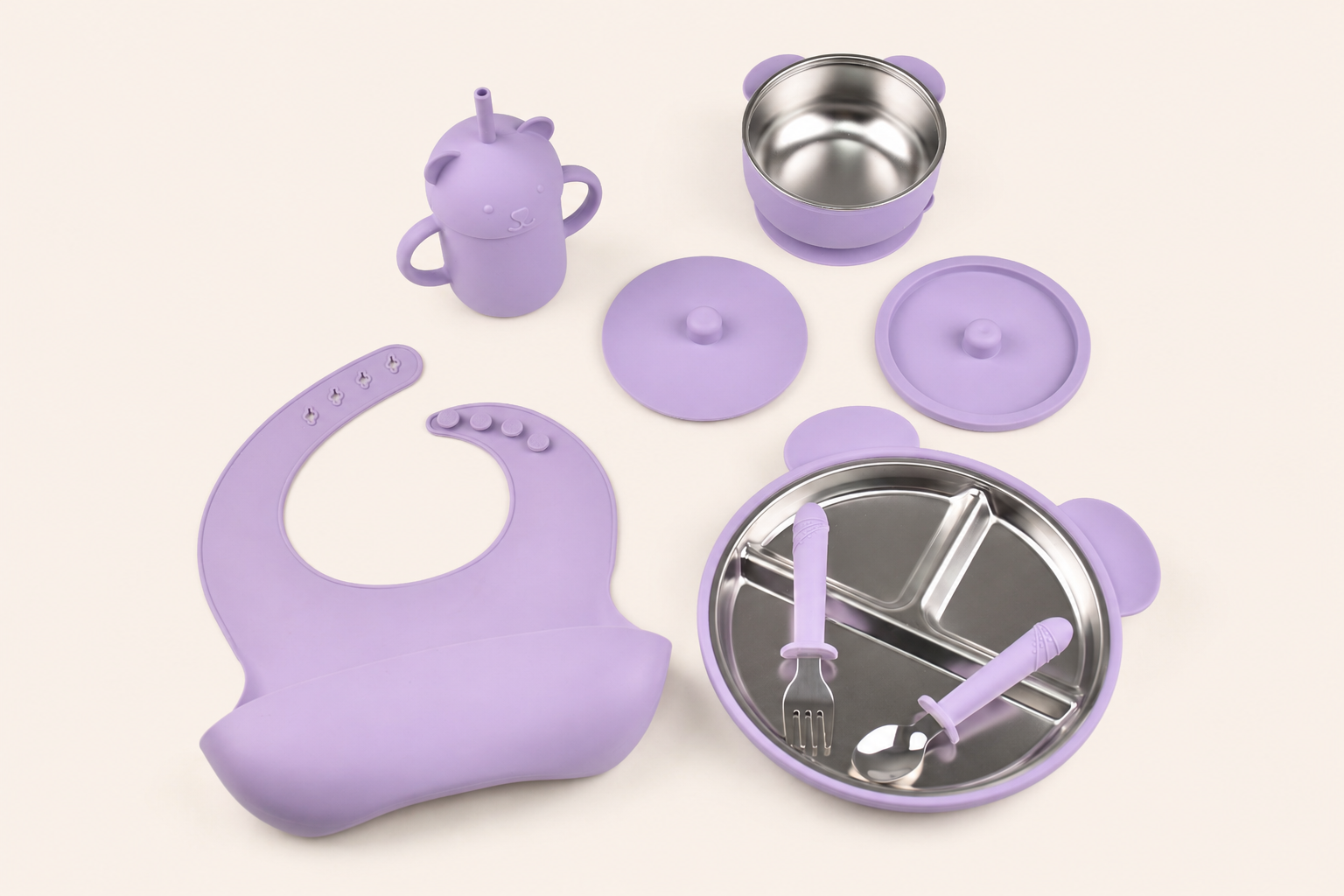
Suction plate troubleshooting
A suction plate depends on direct contact between a flexible base and a suitable surface. Crumbs, moisture, texture, trapped air and placement can all change the result. Before replacing a plate, work through this quick check.
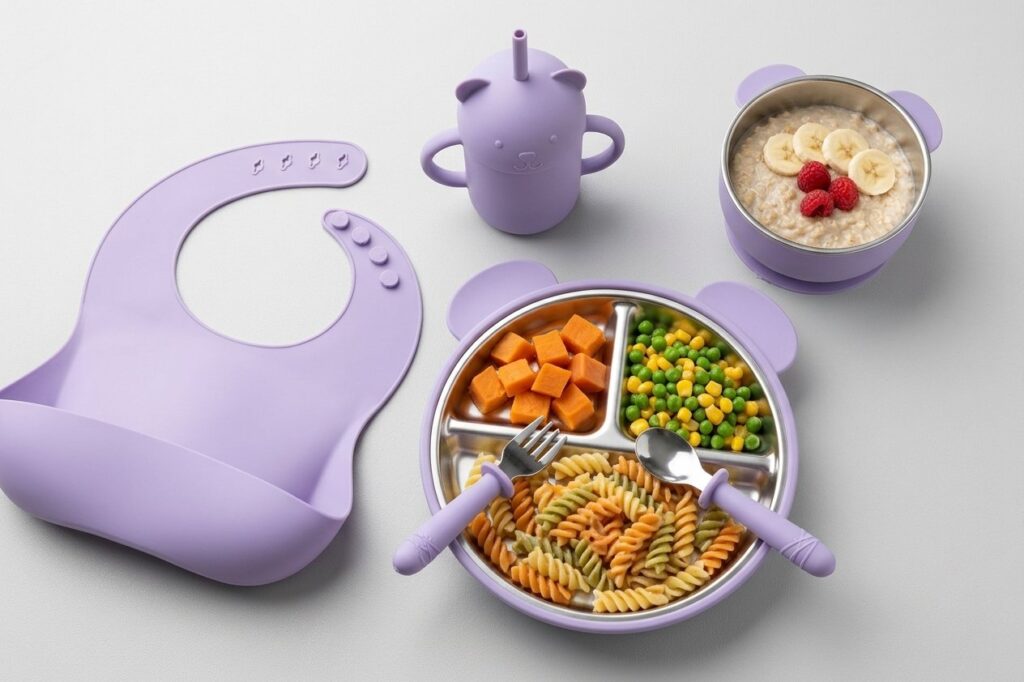
Want stainless steel with removable suction?
The Bear Set combines a firm stainless steel eating surface with a removable silicone suction base that can be separated for washing and drying.
Why do suction plates stop sticking?
The most common reason is an incomplete seal. A suction base needs to push air away and maintain close contact with the table or tray. Anything between those two surfaces can create a path for air to return.
- The surface is textured or porous. Timber grain, stone texture, grout lines and some matte highchair trays can interrupt the seal.
- There are crumbs or grease underneath. Even a small amount can reduce direct contact.
- The base is damp in the wrong places. Some designs perform differently when wet, so follow the individual instructions.
- The plate has not been pressed down evenly. Air may remain trapped under one side.
- The base is not fitted correctly. On removable designs, check that the steel component sits fully and evenly inside the silicone base.
- The silicone is damaged or distorted. A cut, split or permanently warped edge can prevent an effective seal.
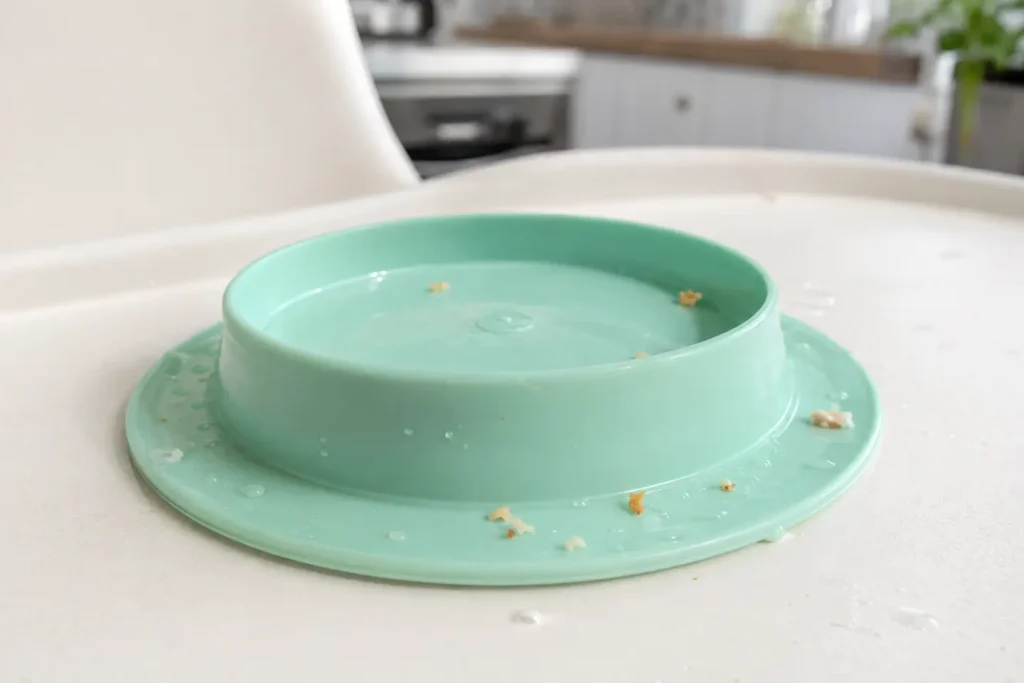
Step-by-step suction plate check
- Remove the plate and clear all food from the table or highchair tray.
- Wash or wipe the contact area so it is free from oil, detergent and crumbs.
- Check that the surface is smooth, flat and non-porous.
- Inspect the underside of the suction base and its outer edge.
- If the base is removable, fit it back onto the plate evenly.
- Place the plate away from seams, curved edges and textured sections.
- Press down firmly and evenly according to the product instructions.
- Test the plate gently before serving food.
Suction is a helpful mealtime feature, not a restraint or a substitute for supervision. Babies and toddlers should remain seated, supported and actively supervised whenever they are eating. Australian guidance recommends a safe, supported and supervised eating position; see the Raising Children Network practical feeding guidance.
Which surfaces work best for suction plates?
Smooth, flat and non-porous surfaces usually provide the most consistent contact. Examples can include a smooth sealed highchair tray, glass or a glossy benchtop. Results still depend on the individual plate and surface.
Deep wood grain, tile joins, rough stone, fabric, unfinished timber and strongly curved trays are more likely to admit air. If a table has a suitable smooth section, keep the entire suction base within that area.
Clean joins matter too
Removable components make it easier to inspect the underside of the plate and the inside of the suction base after every meal.
Should you wet a suction plate?
There is no universal answer. Some products are intended for a clean, dry surface; others may provide different instructions. Follow the manufacturer’s directions rather than using a general social-media tip. Too much water can also let a plate slide even if the base initially seals.
Can detergent residue affect suction?
Yes. Detergent or oily food left on the underside can make the base slippery or interfere with close contact. Rinse silicone thoroughly and let it dry separately from the steel component. Wipe the table or tray before the meal as well.
Why does the plate lift when a toddler pulls the edge?
Suction bases resist movement best when force is spread across the plate. A determined toddler who finds and lifts the outer edge may release the seal deliberately. Keep the plate fully on the flat part of the tray, avoid placing the release edge directly toward the child when the design allows, and continue supervising.
When should the suction base be replaced?
Stop using a component if it is split, torn, sticky, permanently distorted or no longer fits the plate as intended. Do not attempt to glue or modify a food-contact component. Contact the manufacturer if you are unsure whether a visible change is normal wear.
Frequently asked questions
Do suction plates stick to wooden tables?
Some sealed wooden tables are smooth enough, while visible grain, joints or texture can reduce the seal. Test the product gently before adding food.
Will a suction plate stick to every highchair tray?
No. Tray materials and textures vary. A smooth, clean and flat tray offers the best chance of consistent contact, but no suction product should be presented as universal.
Does stronger suction mean a plate cannot move?
No. Suction can reduce sliding and accidental movement, but a child may still release or move the plate. Active supervision remains essential.
Can a removable suction base be washed in the dishwasher?
Follow the product-specific care instructions. The Bear Set is dishwasher safe when its stainless steel and silicone components are separated before washing.
Practical guidance by email
Make toddler mealtimes a little simpler
Receive occasional feeding-set guides, cleaning tips and product updates from PureSteel Co.
Practical design for real mealtimes
Explore the removable steel and silicone system
See the plate, bowl, handled straw cup, utensils, lids and bib included with The Bear Set.