Starting-solids checklist
Baby-led weaning does not require a cupboard full of specialised products. A safe seating position, suitable food preparation, close supervision and a few practical feeding essentials are more useful than buying every accessory at once.
Start with one complete feeding set
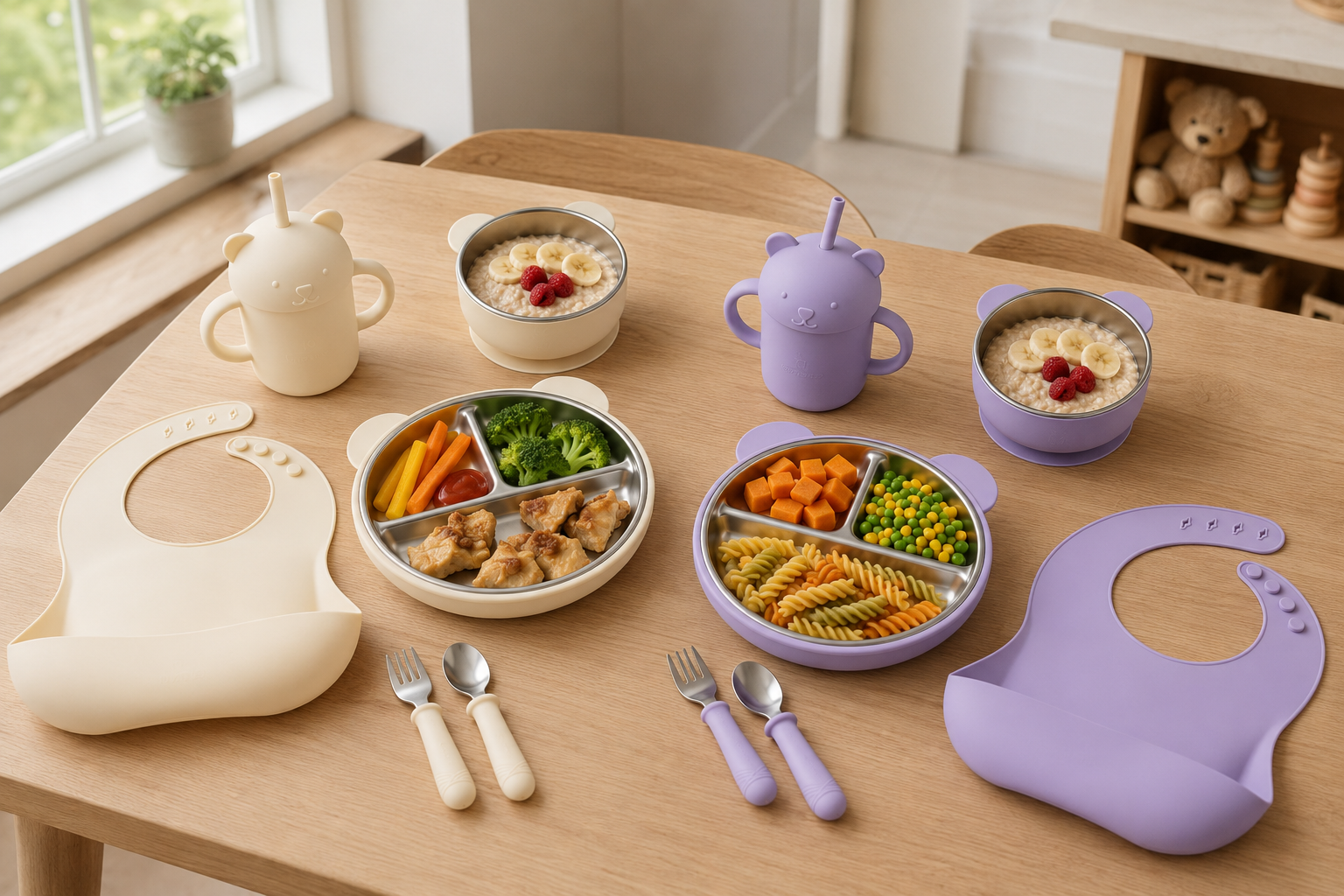
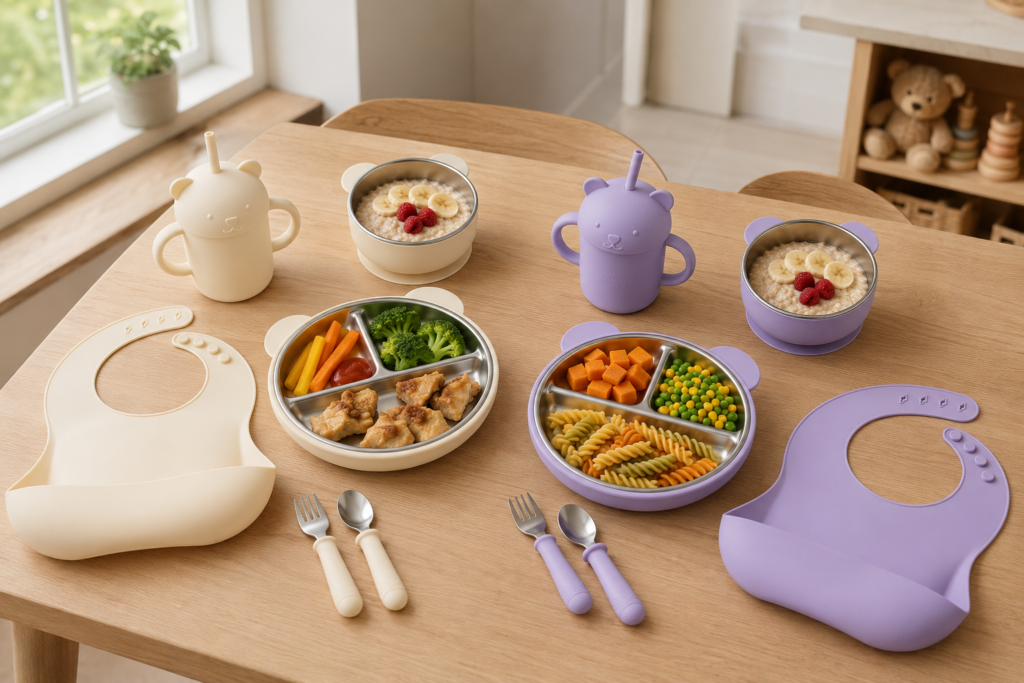
The Bear Set brings together a divided plate, bowl, handled straw cup, two lids, spoon, fork and bib in one coordinated set.
Baby-led weaning essentials checklist
- A stable highchair or safe supported seating position
- A plate or bowl that fits the tray
- Short, easy-to-hold utensils
- An age-appropriate cup
- A bib or clothing protection
- Clean food-preparation equipment
- A simple washing and drying routine
- Active adult supervision at every meal
- Current knowledge of choking prevention and first aid
1. Safe, supported seating
Start with the eating position rather than the plate. The child should be seated safely, supported and supervised. Avoid feeding a baby while they are moving around, lying back or travelling in a car or pram.
Readiness for solids involves development as well as age. Australian guidance notes signs such as good head and neck control, sitting upright with support and showing interest in food. See Raising Children Network’s current guidance on introducing solids.
2. A plate that fits the highchair
A plate should sit fully on the usable flat area of the tray. If it overhangs, covers a cup recess or sits over a textured section, it may be difficult for the child to reach and a suction base may not seal consistently.
A divided plate can keep small portions and textures separate. An open bowl is useful for foods that need scooping. Having both formats lets families choose according to the meal rather than forcing every food into one plate.
Use the Toddler Plate Size Guide to measure the tray before ordering.
3. Utensils for early self-feeding
Short utensils with handles proportionate to small hands can support practice with scooping and bringing food to the mouth. Expect a combination of fingers, utensils and adult assistance while the child learns.
Do not force a spoon into a baby’s mouth. Offer food responsively and allow time for the child to explore. The Bear Set spoon and fork are 13 cm long and are intended for use with adult supervision.
Plate, bowl, cup and utensils together
Compare the exact dimensions and eight included pieces before deciding whether the set fits your highchair and routine.
4. A practical cup
Choose a cup appropriate to the child’s developmental stage and follow professional advice if there are feeding or swallowing concerns. Handles can provide another place to grip while a lid helps contain ordinary movement during practice.
The Bear Set cup holds 200 mL and comes with two lid options, including a straw lid. It is not spill-proof in every position, and the cup should still be used under supervision.
5. A bib that supports quick clean-up
Mess is part of learning to eat. A bib with a food-catching pocket can reduce the amount reaching clothing and the floor. Check the fit before every meal and remove the bib after eating; feeding accessories should never be treated as toys or left on an unsupervised child.
6. Food preparation and hygiene basics
Wash hands before preparing or serving food, use clean utensils and keep food-contact surfaces clean. Plates, bowls and spoons can be washed in warm soapy water or according to their dishwasher instructions.
For a removable steel-and-silicone design, separate the components, rinse joins thoroughly and dry everything before reassembly. See How to Clean Stainless Steel Toddler Plates.
7. Choking prevention and supervision
Equipment cannot make a meal risk-free. An adult needs to remain close, attentive and able to respond throughout the meal. Prepare foods in a form appropriate to the child and avoid hard or unsuitable pieces.
Parents and carers can review Australian choking-prevention and first-aid information and complete an accredited first-aid course. Seek individual advice when feeding development or safety is uncertain.
What you probably do not need at the beginning
You do not need multiple versions of every plate, an elaborate storage system or gadgets that do not suit your kitchen. Begin with a stable seat, clean feeding equipment and a small selection of practical pieces. Add items only when a repeated need becomes clear.
How to organise a simple BLW station
- Keep one clean plate, bowl, cup, bib and utensil set together.
- Store washed components only when fully dry.
- Keep a clean cloth within reach for the tray, not for wiping inside the child’s mouth.
- Prepare a separate container for used items when eating away from home.
- Keep emergency contact details and first-aid knowledge current.
Frequently asked questions
What age do babies start baby-led weaning?
Many babies show readiness for solids at around 6 months, but readiness varies. Look for developmental signs and seek advice from a health professional rather than relying on age alone.
Do I need a suction plate for BLW?
No single plate feature is essential. Suction can reduce ordinary sliding on a compatible smooth surface, but it does not replace supervision and may not work on every tray.
Is a divided plate better than a bowl?
They serve different meals. A divided plate separates foods; a bowl supports scooping. A set containing both gives more flexibility.
Do babies need special cutlery?
They need utensils that are safe, age-appropriate and comfortable to practise with. Shorter handles can be easier for small hands, but children develop skills at different rates.
Practical guidance by email
Make toddler mealtimes a little simpler
Receive occasional feeding-set guides, cleaning tips and product updates from PureSteel Co.
Fewer pieces, more practical use
Prepare for everyday self-feeding
Explore a complete stainless steel and silicone feeding set designed for meals from approximately 6 months to 5 years.